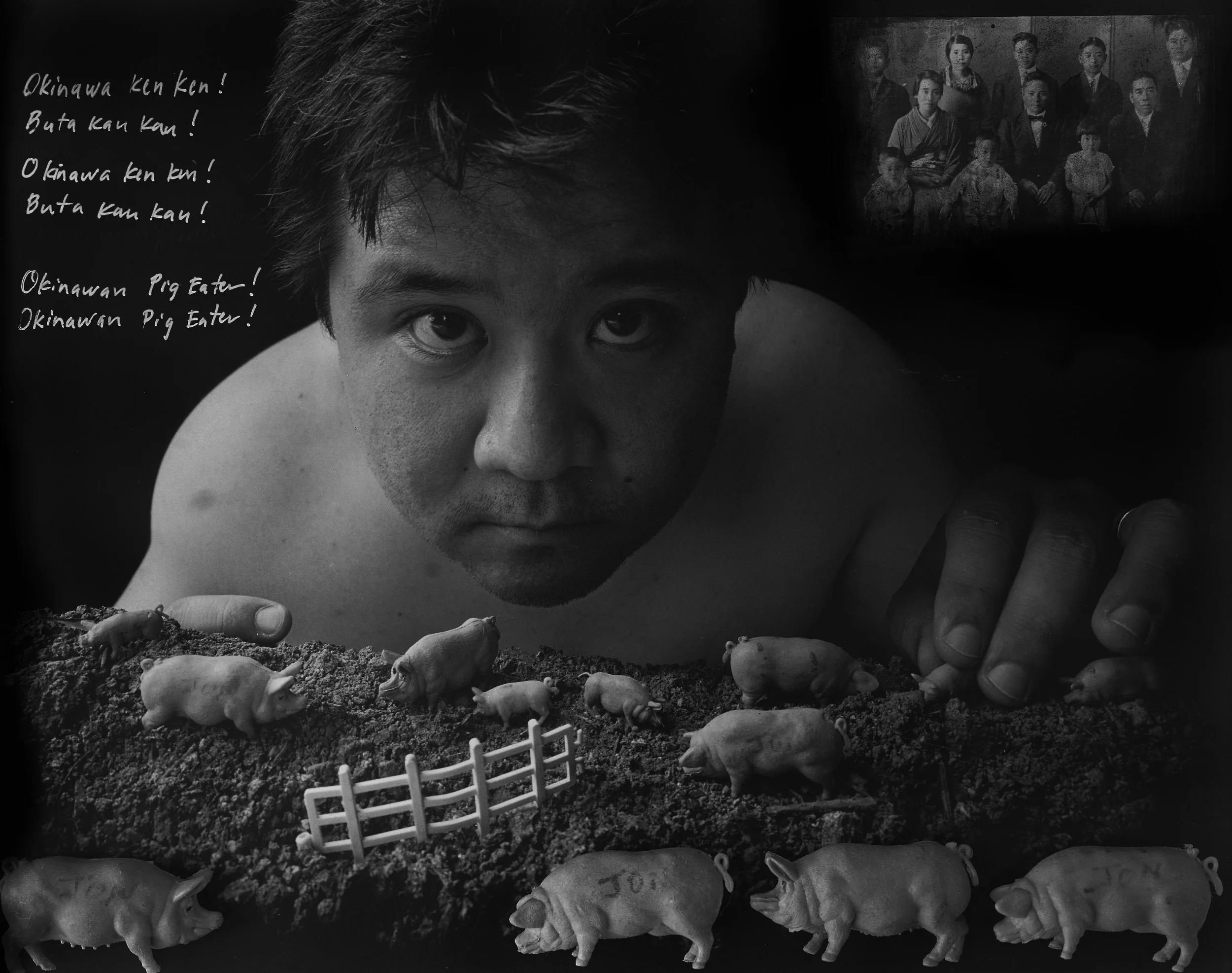
Talking Story- Self Portrait Stories
1999-2003
Okinawan “Talking Story” in the Midwest
On December 5, 1899 thirty men departed the Okinawan port of Naha aboard the S. S. Satsuma Maru as the first group of Okinawans bound for the sugar plantations in Honolulu, Hawaii. They arrived in paradise on January 8, 1900 and began building a life in this new land. Eight years after the arrival of the initial group of plantation laborers from Okinawa, the United States and Japan issued the Gentleman’s Agreement, which drastically restricted Japanese immigration. Within those eight years nearly 10,000 Okinawans made the passage to Hawaii - among them my ancestors. I was born a sansei, or third generation Okinawan-American, in Honolulu, Hawaii, sixty-four years after that first ship left Naha.
My maternal great-grandfather left Okinawa for Hawaii in 1907 and my paternal grandfather arrived in the islands in 1908. They both came to Hawaii to work on the sugar plantations but soon found themselves in other professions. My maternal great-grandfather was born in Goeku, Okinawa, just north of the capitol city Naha. He was extremely creative and carved sculptural planters from stone in his free time. He walked to work in a stone quarry just north of where I was born, on land that the University of Hawaii now occupies. I remember living with them when I was very young. “Gigi” died in his sleep while taking a nap in the bedroom we shared. I was five years old and images from that day still float through my mind. My great-grandmother seemed to disappear from my life after “Gigi” died. I was puzzled by that for quite a while because I couldn’t remember the day she died. I realized years later that she had left Hawaii to die in Okinawa.
My paternal grandmother had four sons and my father was the youngest. My paternal grandfather died prematurely at the age of forty. My grandmother was pregnant with my dad at the time so my father never met his father. “Yamashiro baban” was a strong woman who lived long enough to see the birth of every grandchild. I was ten years old when she died and that was the first time that I remember consciously having to cope with the death of someone I knew and loved. I remember her tattooed hands and the wonderful way she held the family together. “Yamashiro baban” came to Hawaii as a young picture bride. My grandfather saved her from returning to Okinawa after her first marriage failed. She was the last “issei” or first generation Okinawan immigrant that I remember knowing.
There is no written record of the lives that my great-grandparents and grandparents led. All that remain are stories told by my relatives and a few photographs that inspire stories about other people within the frame. My Auntie Yuki is married to the oldest of the Yamashiro brothers and has become the unofficial historian of the family. When the photographs are brought out the verbal mapping of who is who and how we are related to them starts to flow. Stories of major incidents in the family’s history are retold in the “talk story” style of the islands. The local “talk story” sessions happen often when my uncles get together. The recounting of important events are told with humorous asides and are sometimes woven into lessons for the younger generation. The transfer of information through stories, true and embellished, told in the musical “Pidgin English” of Hawaii, serve as the direct inspiration for the photographs I currently make. Childhood stories, ancestral dramas, cultural traditions and the characters and events that shaped my youthful being have also begun to populate my mind. Living for the past eleven years in the heartland of the United States has heightened my awareness of the cultural mixing I took for granted in Hawaii. Because of my culturally diverse upbringing, my Okinawan heritage and my present home in the Midwest, issues of culture and ethnicity are prominent themes in my creative work. I find myself on a voyage through the past that, I hope, will reconcile the future.
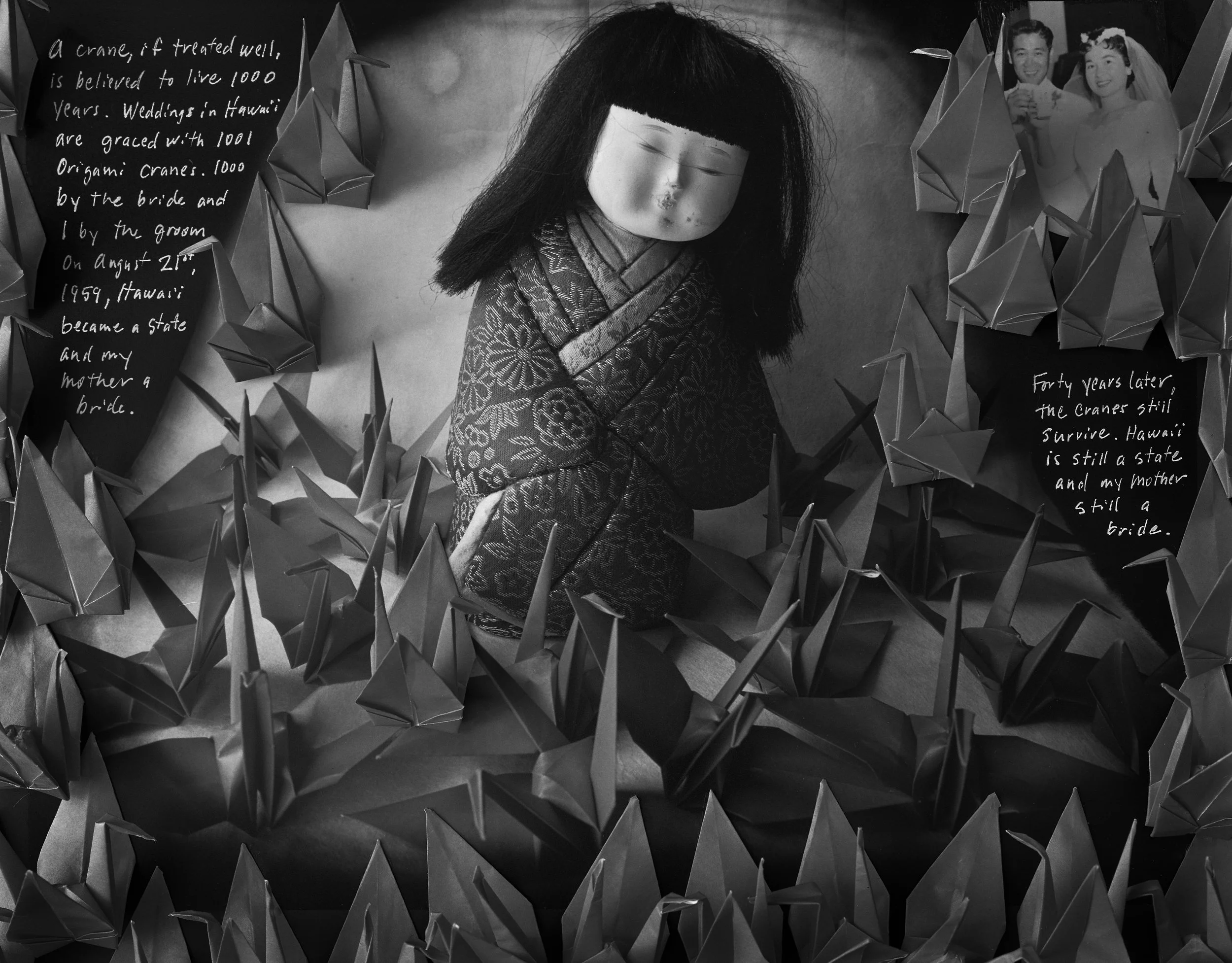
1000 Cranes
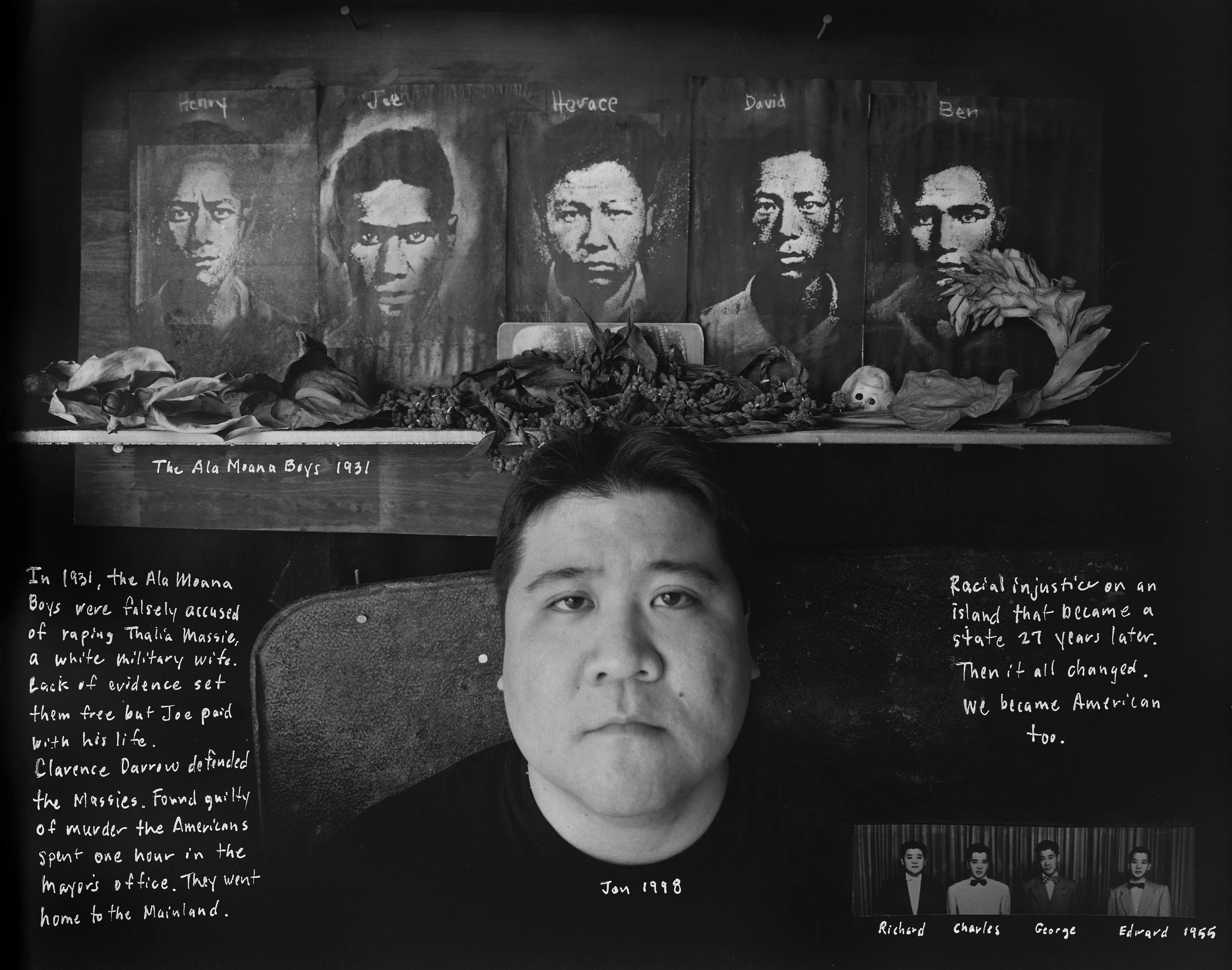
Ala Moana Boys
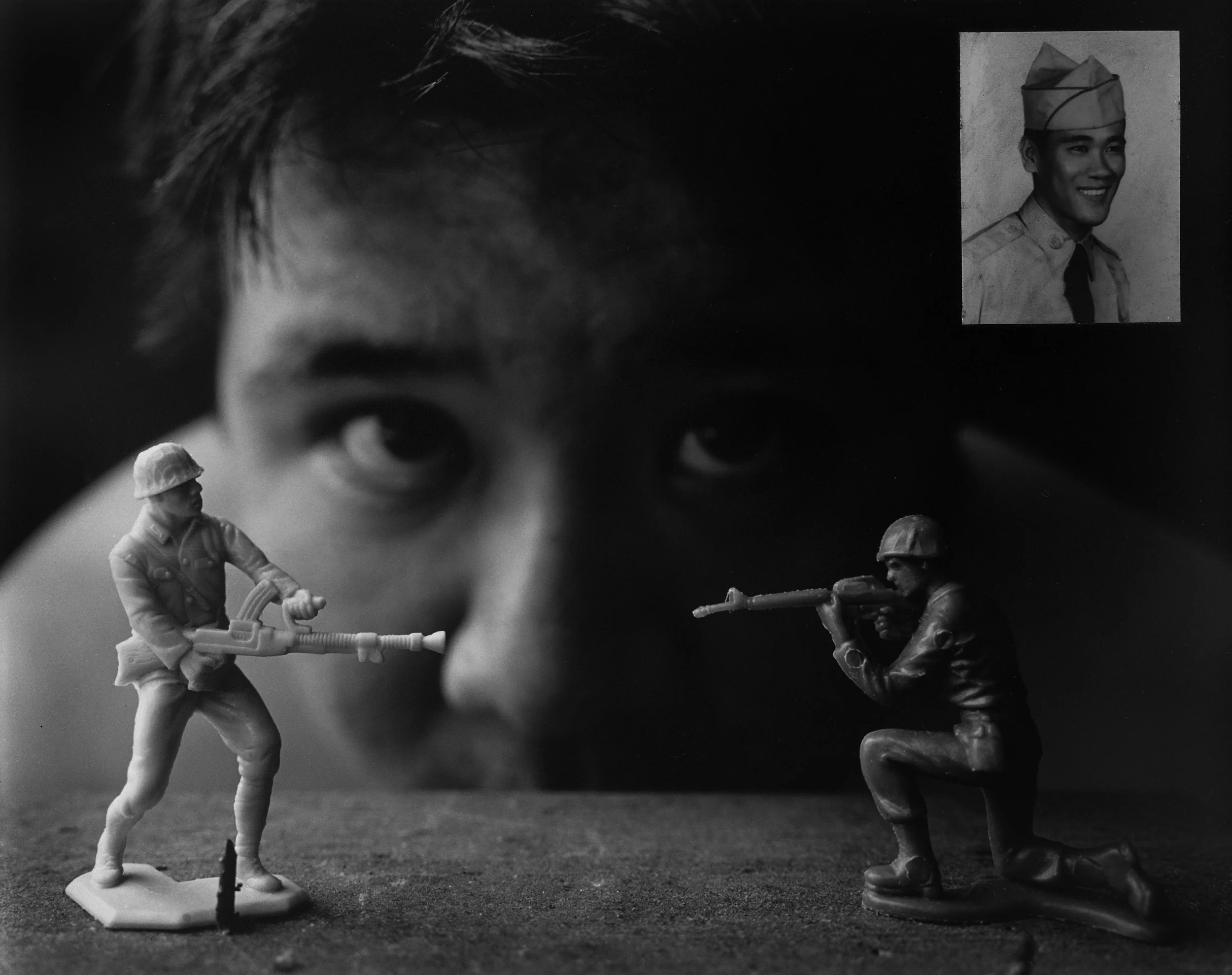
Army Guys
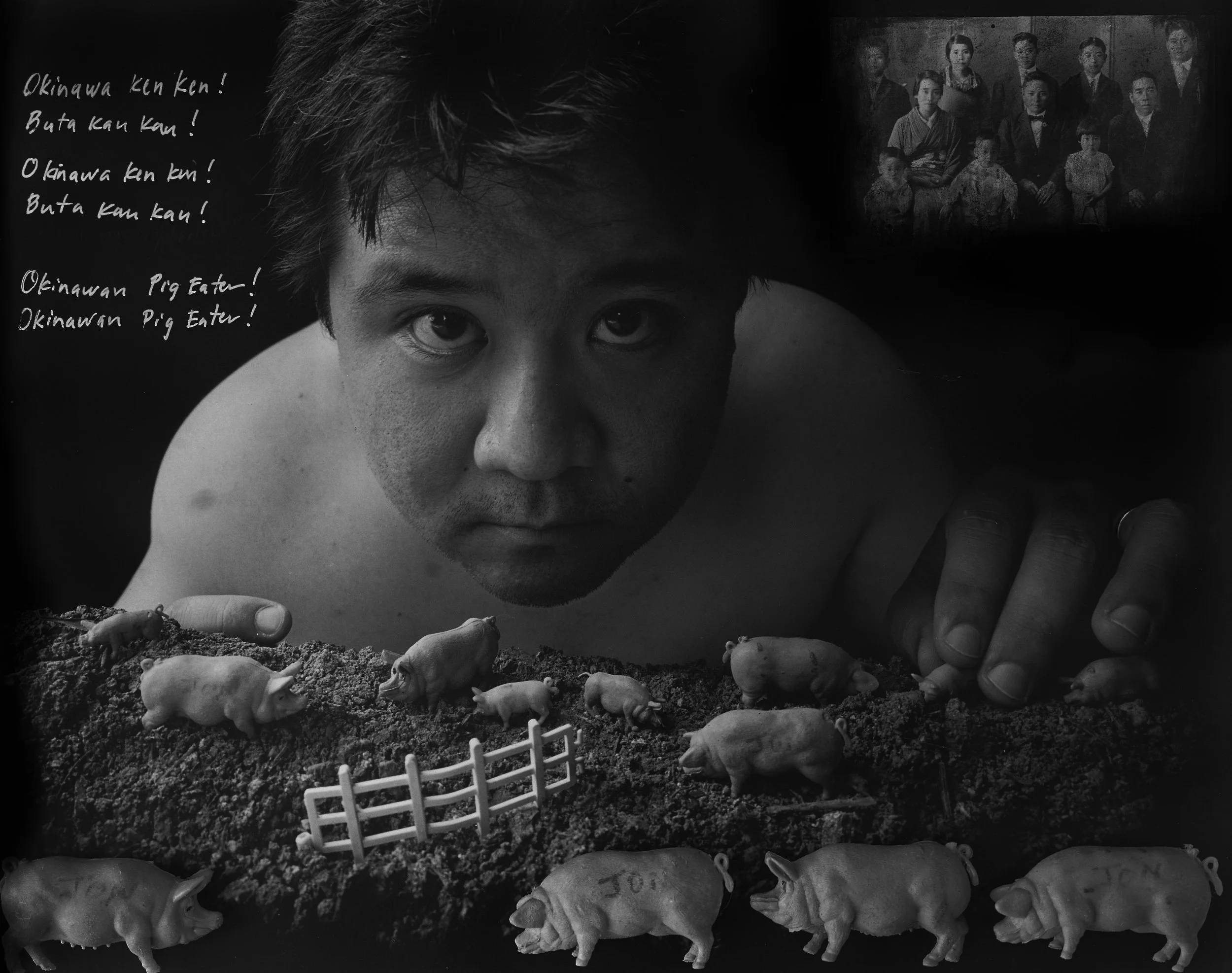
Buta Kau Kau

Momotaro and Me